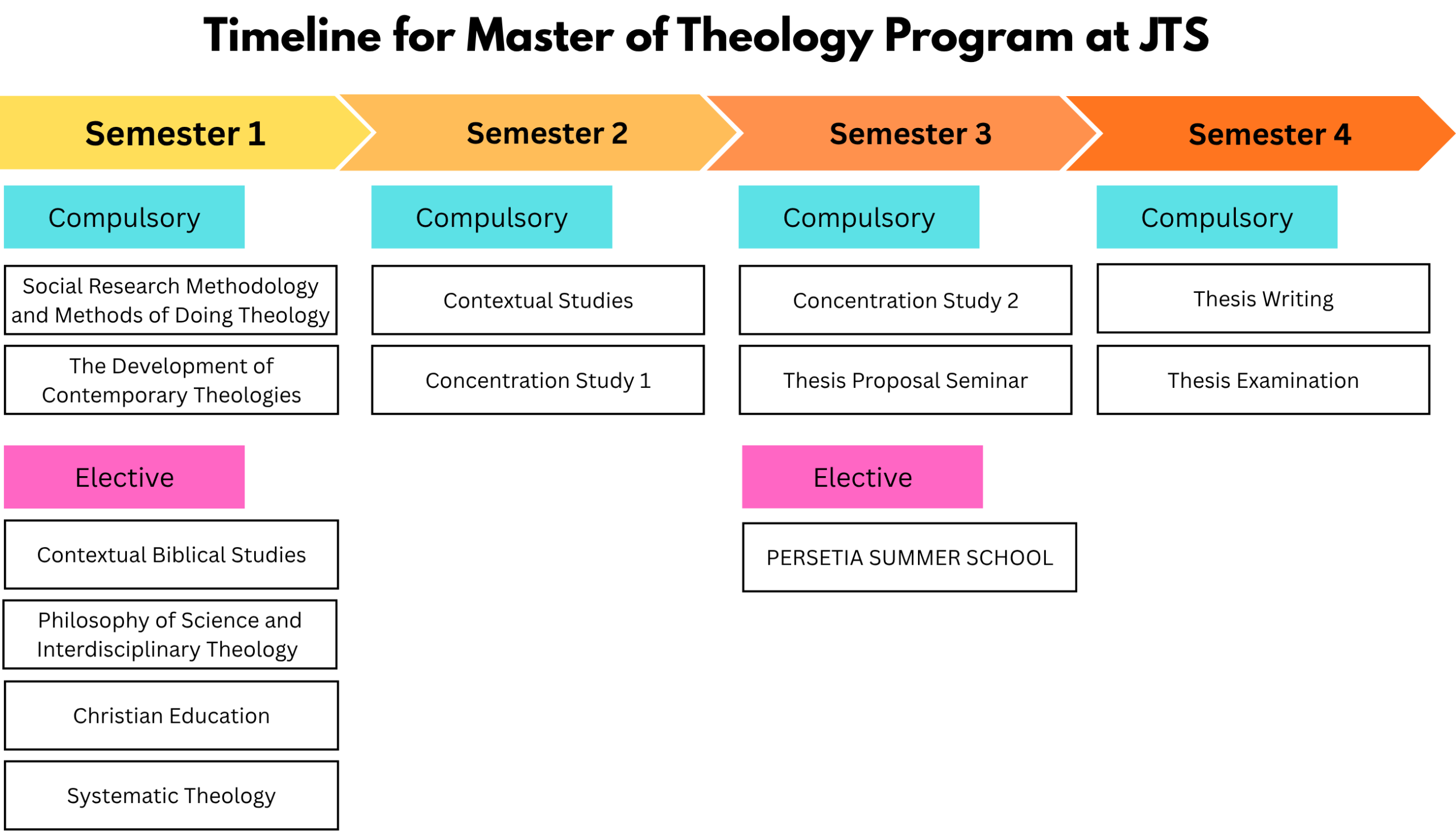
The Master of Theology program is a two-year academic journey that integrates foundational learning, contextual engagement, and independent research.
Semester 1
In the first semester, students take two required courses and two elective courses based on their interests. Students are introduced to methodological and theoretical frameworks in theology and social research, alongside selected elective courses. Students must take two compulsory courses: Social Research Methodology and Methods of Doing Theology and The Development of Contemporary Theologies.
Social Research Methodology and Methods of Doing Theology equips students with an academic horizon that shapes both methodological perspectives and engagement with current discussions in theological methods. This foundational course serves as the basis for constructing a “research plan” derived from theological topics explored during the first two semesters, which will later be developed into an effective and efficient thesis proposal by the end of the third semester.
The Development of Contemporary Theologies provides graduate students with an academic horizon consisting of key concepts that represent recent developments in theological thought. These conceptual tools help cultivate initial theological ideas, which are developed through the formation of a “research plan” during the first two semesters and eventually refined into an effective thesis proposal by the end of the third semester.
Students are encouraged to take two elective courses. This component enables graduate students to broaden their theological perspectives by selecting courses from various academic clusters within the Master’s program, from other programs, or even from outside the institution, subject to approval by the Head of Program and in accordance with a pre-planned study designed prior to registration
Semester 2
For the Contextual Studies, students engage in contextual theological analysis and develop focused research within their chosen area of concentration (major), encouraging to reach an academic publication (an article). Meanwhile, Concentration Study 1 facilitates a collaborative learning process within the context of each student’s personal research focus, helping to sharpen their academic perspectives. The process is led by a program lecturer who facilitates teamwork between students and supervisors through structured and scheduled discussions.
Semester 3
This semester equips graduate students with a supervised process for developing their thesis proposal by integrating two key dimensions: (a) a personal mentoring relationship with the academic supervisor and (b) scholarly engagement within the research community at JTS. This integrated process enables students to construct a research design with distinctive academic character, shaped according to contemporary scholarly standards. At the end of the course, each student presents their thesis proposal before their supervisor and a panel of examiners.
Semester 4
This course constitutes the core research process at the master’s level, requiring students to analyze and evaluate contemporary theories commonly employed in ecclesial practices and in addressing the needs of society for guidance in lived faith, particularly within the complex realities of human religiosity.
Finally, students must present and defend their research findings to the examiners. This experience cultivates a distinctive competence, preparing them to serve as credible and authoritative resource persons within society.